



Jeweller’s Magnifying Glass: How to Choose a 10X Jewellery Magnifier

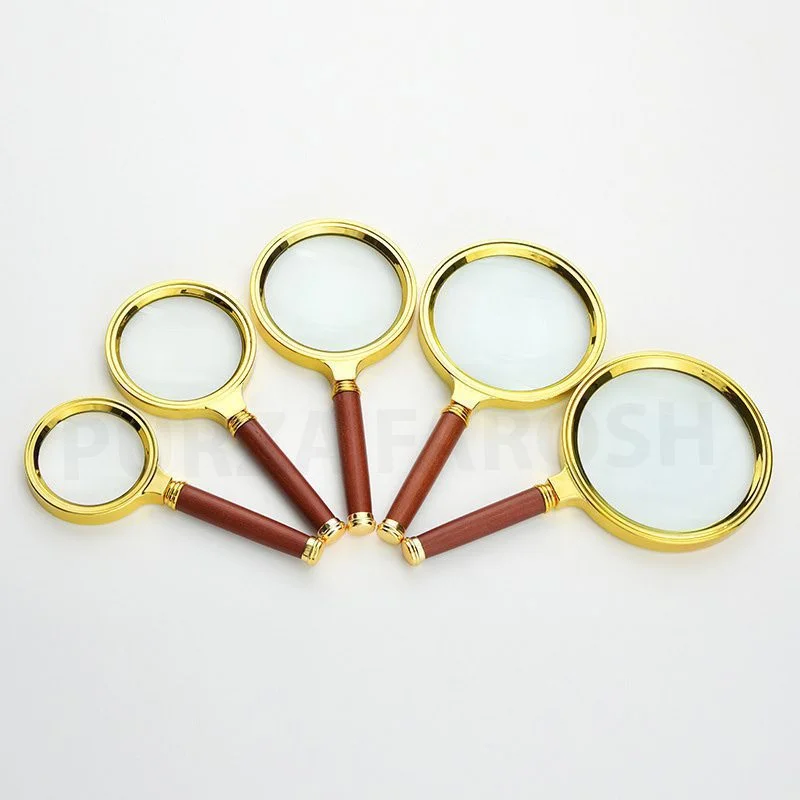
A jeweller’s magnifying glass is a simple but useful inspection tool for viewing small details that are difficult to see clearly with the naked eye. Jewellery makers, repair technicians, hobbyists, watch users, electronics technicians, and other professionals may use magnification to examine small surfaces, components, marks, scratches, settings, or fine details.
Choosing the right jewellery magnifier isn’t just about selecting the highest magnification number. Magnification, lens size, viewing area, handling, optical clarity, lighting, and the type of inspection you perform all affect how practical a magnifying glass will be.
For general jewellery and small-object inspection, a 10X handheld magnifying glass with a larger 100mm lens can provide a different experience from the small 10X jeweller’s loupes commonly used for close gemstone examination.
This guide explains how a jeweller’s magnifying glass works, what 10X magnification means, how to choose one, and when a handheld magnifier is more appropriate than a loupe or digital microscope.
What Is a Jeweller’s Magnifying Glass?
A jeweller’s magnifying glass is an optical inspection tool that makes small details appear larger and easier to examine.
Jewellery can contain very small features, including:
-
Fine surface details
-
Small scratches
-
Stone settings
-
Engraved markings
-
Prongs and clasps
-
Metal finishing
-
Tiny imperfections
-
Gemstone surfaces
A magnifying glass can make these details easier to see without requiring complex electronic equipment.
However, a handheld magnifying glass should not automatically be considered equivalent to a professional gemological loupe. A loupe is typically a compact close-viewing optical instrument, while a larger handheld magnifier provides a broader viewing area and can be more convenient for general inspection.
The best choice depends on what you actually need to inspect.
What Does 10X Magnification Mean?
10X magnification means that an object viewed through the optical system appears approximately ten times larger in angular size than it would under normal viewing conditions.
In practice, 10X can make small details much easier to see.
However, higher magnification does not automatically mean better inspection.
As magnification increases, the usable viewing area and depth of field can become more challenging to manage. Professional jeweller’s loupe guidance commonly uses 10X as an important reference point for gemstone and diamond examination.
For general inspection, therefore, the question should not simply be:
“What is the highest magnification I can buy?”
A better question is:
“What magnification and viewing area make the details I need to inspect easiest to see?”
100mm Lens vs Small Jeweller’s Loupe
One of the most important differences between a handheld magnifying glass and a traditional jeweller’s loupe is lens size and viewing style.
A small loupe is designed for very close inspection and portability. It can be useful when examining gemstones, inclusions, or small details from a controlled viewing distance.
A 100mm handheld magnifying glass, on the other hand, gives you a much larger lens area.
This can make it convenient for:
-
Jewelry inspection
-
General object inspection
-
Small parts
-
Crafts
-
Watches
-
Printed details
-
Collectibles
-
Small electronic components
The two tools therefore serve overlapping but not identical purposes.
Quick comparison
| Lens size | Larger | Usually much smaller |
|---|---|---|
| Handling | Handheld | Close to the eye |
| Viewing area | Relatively broad | Narrower |
| Portability | Easy | Very easy |
| General inspection | Very suitable | Suitable |
| Gemstone close inspection | Useful | Often preferred |
| Electronics inspection | Useful for basic viewing | Limited by viewing area |
| Professional gem grading | Depends on optical specification | Purpose-built loupes are commonly used |
If your work involves general jewellery inspection rather than standardised gemological grading, a larger handheld magnifier can be a practical option.
How to Choose a Jeweller’s Magnifying Glass
Before buying a jewellery magnifier, consider these factors.
1. Magnification
Magnification should match your application.
A 10X magnifier can reveal considerably more detail than a standard low-power reading magnifier, but it also requires more careful positioning.
For users who need to inspect jewellery, small parts, markings, or fine details, 10X is a useful magnification level.
Professional loupe guidance also identifies 10X as the conventional reference magnification for diamond clarity grading.
However, that doesn’t mean every 10X magnifying glass is suitable for professional gem grading. Optical design and lens quality also matter.
2. Lens Size
Lens diameter affects how much of the object you can see through the magnifier.
A larger lens can be convenient for general inspection because it provides a broader viewing area.
This handheld magnifier’s 100mm lens differs from the compact lens of a traditional jeweller’s loupe.
For users who want to inspect a larger portion of a ring, pendant, watch component, craft item, or small object without constantly repositioning the magnifier, a larger lens can be useful.
3. Optical Clarity
Magnification is only useful when the image remains sufficiently clear.
When evaluating a magnifying glass, look for:
-
Clear viewing
-
Minimal distortion
-
Consistent image quality
-
A lens suitable for the intended inspection
-
Comfortable viewing at the working distance
A magnifier that produces a highly enlarged but distorted image may be less useful than one that provides a cleaner and more manageable view.
4. Handle and Grip
A handheld magnifier should be comfortable to hold.
This becomes more important when an inspection takes several minutes.
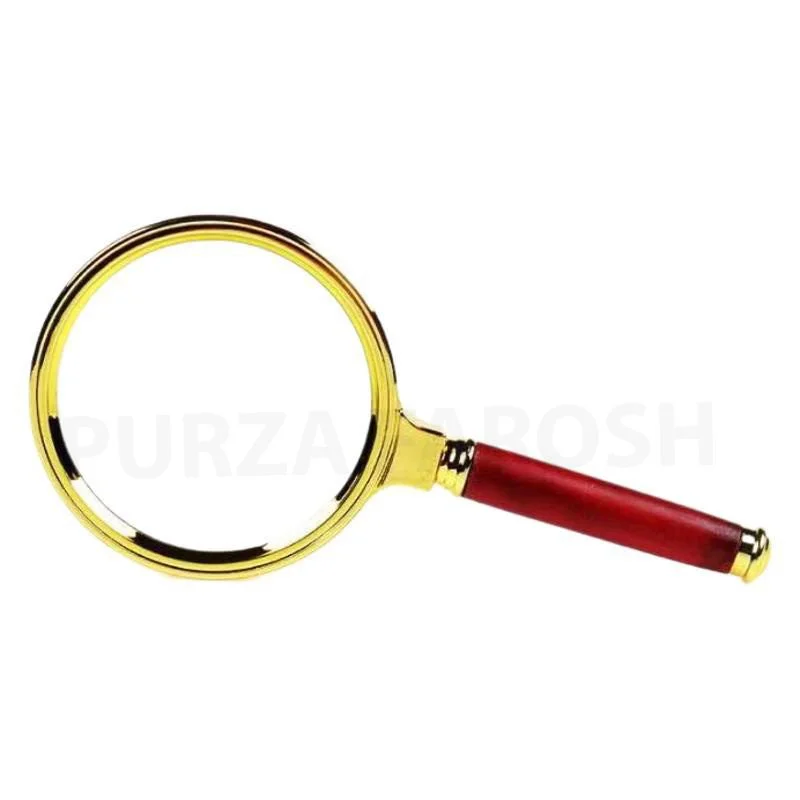
The on this 100mm handheld magnifier provides a conventional handheld format, allowing the user to position the lens over the object being inspected.
A comfortable grip also makes it easier to adjust the viewing angle and distance.
5. Lighting
Lighting is another important part of inspection.
Even a good magnifying glass cannot compensate for poor illumination.
For jewellery inspection, use adequate, evenly distributed light so shadows don’t hide important details.
A magnifying glass with light can be useful in some situations, but don’t assume every handheld jewellery magnifier includes built-in illumination.
If your chosen model doesn’t have integrated lighting, place a suitable external light source close to the inspection area.
What Can You Inspect With a Jewellery Magnifying Glass?
A 10X handheld magnifier can help with many small-detail inspection tasks.
Jewelry
You can use magnification to examine:
-
Ring settings
-
Chains
-
Clasps
-
Prongs
-
Engraved details
-
Surface finishing
-
Small scratches
-
Decorative patterns
Gemstones
A magnifier can help you visually inspect the surface and visible characteristics of gemstones.
However, visual inspection through a basic magnifying glass should not replace professional gemological equipment or laboratory testing.
Watches
Small watch components and surface details can be difficult to see without magnification.
A handheld magnifier can help with basic visual inspection and maintenance-related tasks.
Crafts and Collectables
Magnification is also useful for inspecting:
-
Stamps
-
Coins
-
Models
-
Artwork details
-
Small printed markings
-
Craft components
Can You Use a Jewellery Magnifying Glass for Mobile Repair?
Yes, for basic visual inspection.
A handheld magnifying glass can be useful when you need to examine a small area of a phone or electronic component without setting up a full microscope.
For example, it may help you visually inspect:
-
Small connectors
-
PCB surfaces
-
Solder joints
-
Component markings
-
Fine wires
-
Small physical damage
-
Dust or debris
However, there is an important limitation.
For motherboard-level repair, microsoldering, IC work, and prolonged PCB inspection, a dedicated microscope is generally more practical because it provides a stable setup and hands-free, magnified viewing.
PurzaFarosh already carries dedicated microscope equipment, including digital and trinocular microscope options for mobile repair.
So think of a handheld magnifying glass as a portable inspection tool, not a replacement for a professional repair microscope.
Handheld Magnifying Glass vs Digital Microscope
Which one should you choose?
It depends on your work.
| Quick inspection | Excellent | Good |
|---|---|---|
| Portability | Excellent | Limited |
| No electricity required | Usually yes | Usually no |
| Larger viewing area | Useful | Depends on model |
| PCB inspection | Basic | Much better suited |
| Microsoldering | Not ideal | Much more suitable |
| Screen display | No | Available on many models |
| Long repair sessions | Less convenient | More practical |
| General jewelry inspection | Useful | Useful |
| Detailed electronics work | Limited | Better suited |
If you occasionally need magnification, a handheld model can be convenient.
If you regularly repair phone motherboards or perform precision soldering, consider a dedicated digital microscope for mobile repair instead.
How to Use a 10X Handheld Magnifying Glass Correctly
Getting the best view mostly comes down to positioning.
Step 1: Place the Object on a Stable Surface
Place the jewellery, component, or small object on a clean, stable surface.
Step 2: Use Adequate Lighting
Illuminate the object from a suitable angle.
Avoid placing a strong light directly behind the object if it creates glare.
Step 3: Hold the Magnifier Steadily
Keep the lens parallel to the area you want to inspect.
Step 4: Adjust the Distance
Move the magnifying glass gradually until the image becomes clear.
Do not immediately move it extremely close to the object.
Step 5: Inspect Different Areas
Move the magnifier slowly across the object rather than moving your hand quickly.
Step 6: Clean the Lens After Use
Dust, fingerprints, and smudges can reduce clarity.
Use an appropriate soft lens-cleaning method instead of abrasive material.
Common Mistakes When Using a Jewellery Magnifier
Choosing Magnification Only by Number
10X is not automatically better for every job.
Higher magnification can make positioning and focusing more demanding.
Expecting a Basic Magnifier to Perform Gem Laboratory Testing
A magnifying glass provides visual enlargement. It does not replace specialised gemological instruments.
Ignoring Lighting
Poor lighting can make inspection difficult even when magnification is adequate.
Holding the Lens at an Extreme Angle
An angled lens can affect the viewing experience and make the image harder to inspect.
Using the Magnifier as a Repair Tool
A magnifier is an inspection device. Don’t use it to pry, press, or manipulate delicate components.
Is a 10X Magnifier Good for Jewellery?
A 10X magnifier can be useful for jewellery inspection when you need to examine small details more closely than the naked eye allows.
Suitability depends on lens quality, lens size, viewing distance, lighting, and the type of inspection.
For general jewellery inspection, a 100mm 10X handheld magnifying glass provides a practical combination of substantial magnification and a relatively large lens.
For professional gemstone grading, however, consider the optical specifications and design of a purpose-built jeweller’s loupe rather than choosing based only on the “10X” label. Professional loupe guidance emphasises optical quality and intended use alongside magnification.
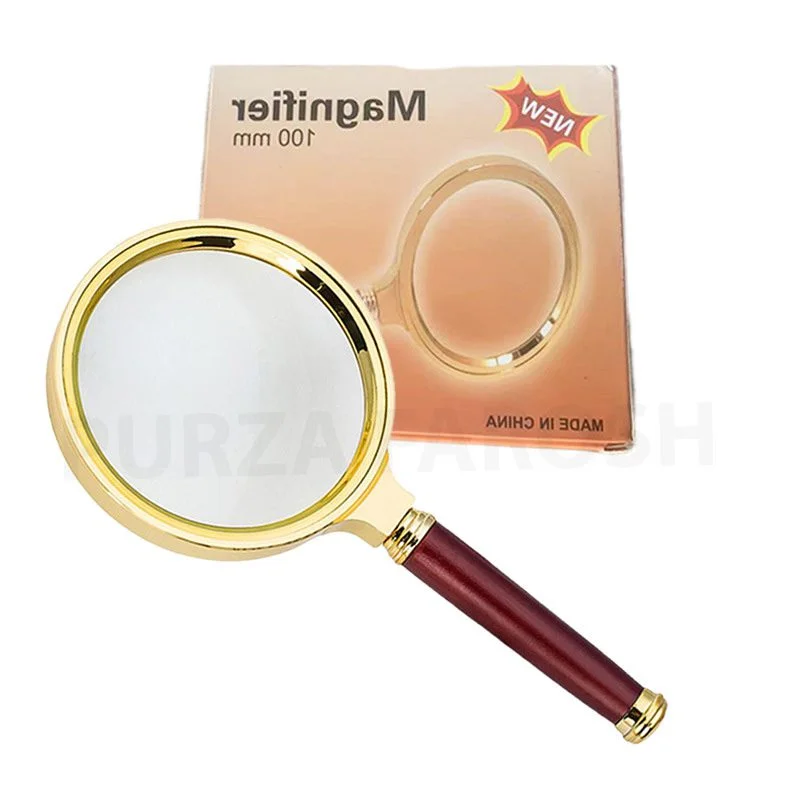
100mm 10X Handheld Magnifying Glass for Jewelry & Mobile Repair
The 100mm 10X Handheld Mobile/Jewelry Magnifier Magnifying Glass with Red Brown Handle is a compact inspection tool listed by PurzaFarosh under its China Tools and Magnifying Glass categories. The current listing shows it at Rs. 480, down from Rs. 550, and marked as in stock.
Its 100mm lens and 10X magnification make it relevant for users who need a simple handheld magnification solution for jewellery, small objects, crafts, and basic mobile/electronics inspection.
It can be particularly practical when you want something that:
-
Does not require a microscope setup
-
Can be moved easily between work areas
-
Provides substantial magnification
-
Has a larger lens than many compact loupes
-
Can be used for general visual inspection
-
Is suitable for occasional mobile repair inspection
View the 100mm 10X Handheld Mobile/Jewelry Magnifier on PurzaFarosh
When Should You Choose a Jeweller’s Loupe Instead?
A jeweller’s loupe may be more appropriate when your primary work involves close gemstone or diamond inspection, and you specifically need a compact optical instrument designed for that purpose.
A traditional 10X loupe is particularly relevant to professional gemological examination because 10X is the conventional magnification used in diamond clarity grading.
Choose a handheld magnifying glass when you prefer:
-
A larger lens
-
Broader general inspection
-
Easier handheld positioning
-
A simple, portable tool
-
Jewellery and small-object inspection
Choose a specialised loupe when your work specifically requires:
-
Close gemstone examination
-
Compact professional optics
-
Controlled loupe viewing
-
Gemological inspection
And choose a microscope when your primary requirement is high-detail electronics repair or microsoldering.
Frequently Asked Questions
What is a jeweller’s magnifying glass used for?
A jeweller’s magnifying glass enlarges small details on jewellery, gemstones, watches, small objects, and other items that are difficult to inspect with the naked eye.
Is 10X magnification good for jewellery?
Yes, 10X can be useful for detailed jewellery inspection. However, a magnifier’s usefulness depends on lens quality, viewing area, lighting, and the specific inspection task.
What is the difference between a jewellery magnifying glass and a jeweller’s loupe?
A handheld jewellery magnifying glass generally has a larger lens and broader viewing area, while a jeweller’s loupe is a compact optical instrument designed for close inspection. They overlap in use but are not necessarily interchangeable.
Can a 100mm magnifying glass be used for jewellery?
Yes. A 100mm handheld magnifying glass can be useful for general jewellery inspection, including examining small surface details, settings, markings, and finishing.
Can a 10X magnifying glass be used for mobile repair?
Yes, for basic visual inspection of small components, connectors, solder joints, markings, and other details. For detailed motherboard repair and microsoldering, a dedicated microscope is generally more appropriate.
Is a 10X magnifier the same as a 10X triplet loupe?
No. “10X” describes magnification, not the complete optical design. A triplet loupe uses a particular multi-element lens design, while a 10X handheld magnifying glass can have a different optical construction.
Should I buy a magnifying glass or digital microscope?
For quick, portable and general inspection, a handheld magnifier can be practical. For PCB inspection, motherboard repair, microsoldering, and extended precision work, a digital or optical microscope is generally more suitable.