



Kaisi K-103 Ultrasonic Cleaner for Mobile Repair & PCB Cleaning
Cleaning is an important part of professional electronics and mobile phone repair. Flux residue, dirt, oxidation, corrosion-related contamination and other debris can collect around small components and difficult-to-reach areas of a motherboard. While manual cleaning can work for many situations, an ultrasonic cleaner for mobile repair provides another method for cleaning compatible electronic parts and PCBs.
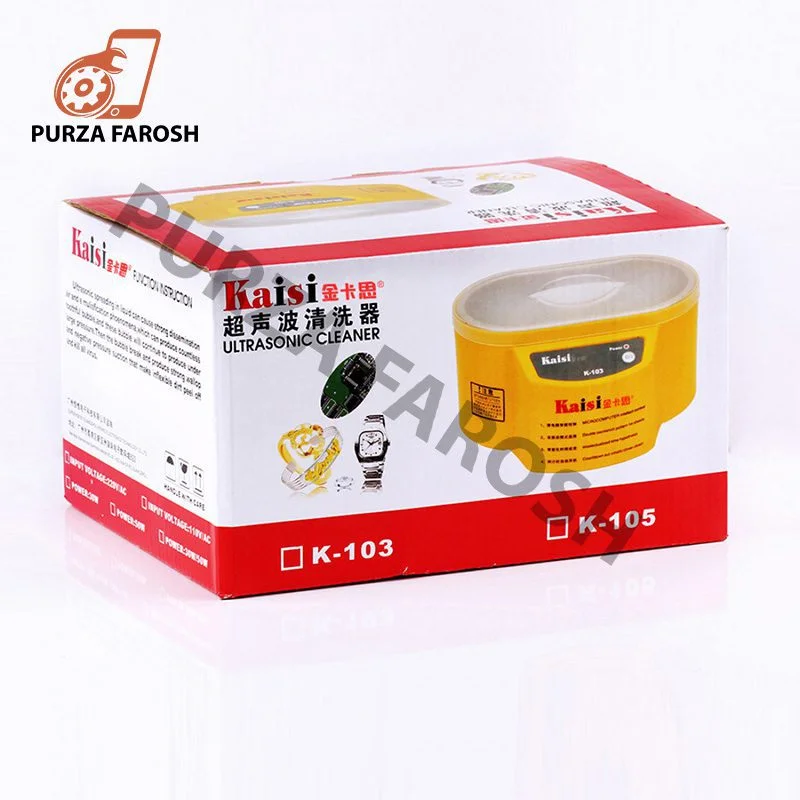
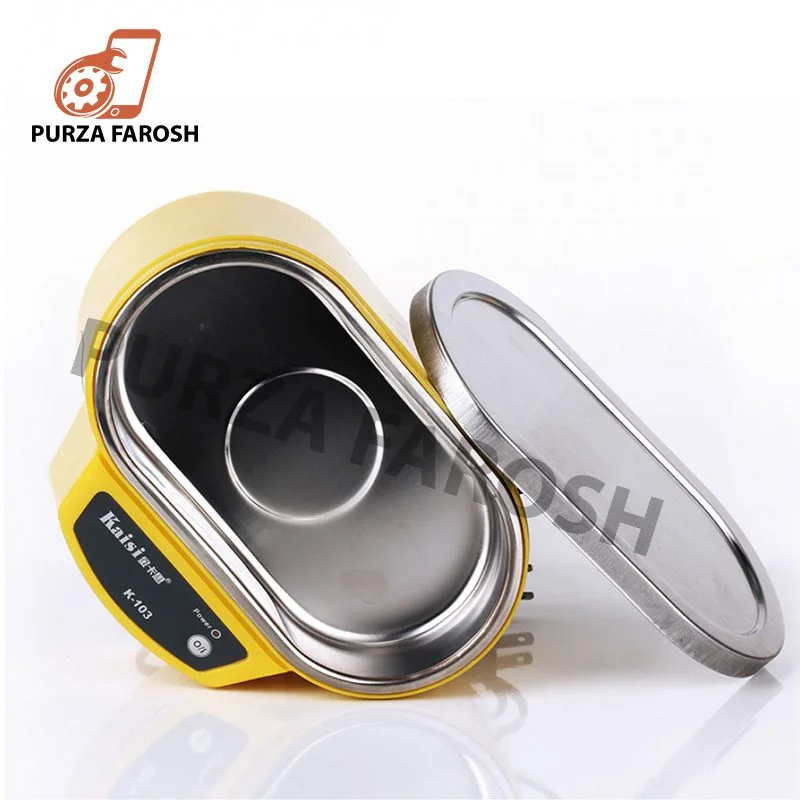
The Kaisi K-103 Ultrasonic Cleaner is a compact ultrasonic cleaning machine designed for applications including mobile phone repair and motherboard cleaning. Available specifications identify a 30W power rating and 40kHz ultrasonic frequency, while the K-103 documentation also lists mobile phone repair and motherboard cleaning among its intended uses.
For technicians looking for practical mobile repairing tools, the K-103 can be considered when a dedicated cleaning process is required for suitable components.
This guide explains what the Kaisi K-103 is, how ultrasonic cleaning works, its important specifications, potential mobile repair applications, safe cleaning practices, limitations, and what to consider before buying an ultrasonic cleaner.
What Is the Kaisi K-103 Ultrasonic Cleaner?
The Kaisi K-103 is a compact ultrasonic cleaning machine designed to clean suitable small parts and electronic components using ultrasonic energy.
Unlike manual cleaning with a brush or swab, an ultrasonic cleaner uses high-frequency sound energy transmitted through a liquid cleaning medium. This creates microscopic bubbles that rapidly form and collapse, producing cavitation that helps loosen contaminants from surfaces and small areas.
For mobile repair technicians, this can be useful when contamination is difficult to reach manually.
The K-103 is particularly relevant to applications involving:
- Mobile phone repair
- Motherboard cleaning
- PCB cleaning
- Small electronic components
- Precision repair parts
- Tweezers and compatible tools
However, an important point is that an ultrasonic cleaner is not automatically safe for every electronic component. The board, component construction, cleaning solution, exposure time and drying process all need to be considered before cleaning.
How Does an Ultrasonic Cleaner Work?
The cleaning action of an ultrasonic machine is based on cavitation.
When ultrasonic energy passes through a suitable cleaning liquid, microscopic bubbles form in the liquid. These bubbles collapse rapidly and create localized cleaning action around surfaces and small gaps.
This process can help loosen contaminants that may be difficult to remove with conventional manual cleaning.
A simplified process looks like this:
Ultrasonic Energy → Cleaning Solution → Microscopic Bubbles → Cavitation → Contaminants Loosened
The effectiveness of the process depends on several factors, including:
- Ultrasonic frequency
- Cleaning power
- Cleaning time
- Cleaning solution
- Type of contamination
- Component construction
- Temperature
- Drying process
Therefore, using an ultrasonic cleaner is not simply a matter of placing a motherboard into the tank and turning the machine on. The cleaning method should be selected according to the item being cleaned.
Kaisi K-103 Ultrasonic Cleaner Specifications
The available K-103 documentation identifies the following core specifications:
| Specification | Kaisi K-103 |
|---|---|
| Product Type | Ultrasonic Cleaner |
| Model | K-103 |
| Ultrasonic Frequency | 40kHz |
| Power | 30W |
| Application | Mobile phone repair, motherboard cleaning and compatible small parts |
| Cleaning Method | Ultrasonic cavitation |
| Product Category | Electronics / Mobile Repair Cleaning Equipment |
The 30W and 40kHz specifications are listed in the available Kaisi documentation for the K-103.
When comparing ultrasonic cleaning machines, don’t judge performance only by wattage or frequency. The correct combination depends on what you are cleaning and which cleaning chemistry is appropriate.
Why Use an Ultrasonic Cleaner for Mobile Repair?
Mobile phone motherboards contain small components, contacts, ICs and narrow spaces that can be difficult to clean manually.
An ultrasonic cleaner for mobile repair can be useful when contamination is present in areas that are difficult to access using a brush or cotton swab.
Potential applications include:
PCB Cleaning
A suitable PCB may be cleaned to remove certain contaminants after repair work.
Flux Residue Removal
Some compatible cleaning processes can help loosen suitable flux residues from electronic boards.
Corrosion-Related Cleaning
Where a board has contamination associated with corrosion, ultrasonic cleaning may be part of a broader restoration process.
Small Component Cleaning
Suitable small components and repair parts may be cleaned when their construction and materials allow ultrasonic treatment.
Tool Cleaning
Some small repair tools can also be cleaned, provided the materials are compatible with the cleaning solution and ultrasonic process.
The machine should always be treated as a specialized cleaning tool, not a universal solution for every mobile phone component.
Kaisi K-103 for PCB Cleaning
PCB cleaning is one of the most relevant applications for an ultrasonic cleaner in electronics repair.
Before cleaning a board, the technician should first inspect it carefully.
Look for:
- Corrosion
- Loose components
- Physical damage
- Contamination
- Exposed or damaged areas
- Sensitive components
- Connectors
- Residue from previous repair work
The cleaning process should then be selected according to the board and contamination.
The K-103 can be useful as part of this workflow because its 40kHz ultrasonic frequency provides cavitation-based cleaning action.
However, the machine cannot determine whether a motherboard is suitable for ultrasonic cleaning. That decision remains with the technician.
How to Clean a Suitable PCB With an Ultrasonic Cleaner
A careful workflow is more important than simply using maximum cleaning power.
Step 1: Inspect the PCB
Examine the motherboard before placing it into the cleaning process.
Identify corrosion, damaged components, loose parts and areas that may require special attention.
Step 2: Disconnect All Power
The PCB should be completely disconnected from batteries, chargers and other power sources before cleaning.
Never clean an electrically powered board.
Step 3: Select a Compatible Cleaning Solution
Use a cleaning solution appropriate for the specific electronic assembly and contamination.
Do not assume that every household cleaning liquid is suitable for electronics.
Step 4: Prepare the Ultrasonic Cleaner
Fill the tank according to the machine’s instructions and prepare the cleaning solution properly.
Avoid overfilling the tank.
Step 5: Select an Appropriate Cleaning Cycle
Choose a suitable cleaning time and operating conditions based on the board, contamination and cleaning solution.
More cleaning is not automatically better.
Step 6: Clean the PCB
Place the compatible board appropriately in the cleaning solution and run the selected cycle.
Avoid unnecessary mechanical handling while the machine is operating.
Step 7: Rinse if Required
Some cleaning processes require rinsing after the main cleaning stage.
Follow the instructions for the specific cleaning solution being used.
Step 8: Dry Completely
This is one of the most important stages.
The board must be completely dry before inspection, testing or power is applied.
Moisture trapped beneath components or inside connectors can cause problems when power is restored.
Important Safety Considerations
An ultrasonic cleaner can be extremely useful, but incorrect cleaning can damage electronic equipment.
Do Not Clean Every Component Automatically
Some components, assemblies or materials may not be suitable for ultrasonic cleaning.
Always consider component construction before starting.
Avoid Flammable Liquids in the Tank
Do not put flammable solvents such as alcohol or acetone directly into an ultrasonic tank unless the equipment is specifically designed and certified for that application.
Heated ultrasonic systems combined with flammable liquids can create serious fire hazards.
For electronics cleaning, use a compatible cleaning chemistry intended for the specific application.
Never Power a Wet PCB
A board must be completely dry before electrical testing.
This is especially important around connectors, ICs and areas where liquid can remain trapped.
Do Not Assume Maximum Power Is Best
A stronger or longer cleaning cycle does not automatically mean better results.
The correct process depends on the board, contamination and cleaning chemistry.
Kaisi K-103 vs Manual PCB Cleaning
Both ultrasonic and manual cleaning have useful roles in mobile repair.
| Cleaning Method | Best Suited For |
|---|---|
| Cleaning Brush | Light surface contamination |
| Cotton Swab | Targeted cleaning |
| Manual Cleaning Solution | Specific residue removal |
| Air Blower | Dust and loose particles |
| Ultrasonic Cleaner | Suitable deep-cleaning applications |
| Microscope | Detailed inspection before/after cleaning |
A professional technician does not necessarily need to use ultrasonic cleaning for every motherboard.
Sometimes a small contaminated area can be cleaned more quickly using a targeted manual method.
The Kaisi K-103 becomes more useful when the contamination or component geometry makes manual cleaning difficult.
Kaisi K-103 40kHz Ultrasonic Cleaner: What Does 40kHz Mean?
The 40kHz ultrasonic frequency indicates that the ultrasonic energy operates at approximately 40,000 cycles per second.
Frequency influences the size and behavior of cavitation bubbles and therefore affects the cleaning characteristics of an ultrasonic system.
The important point for a technician is that 40kHz is a common ultrasonic-cleaning frequency, but frequency alone does not determine whether a machine is suitable for a particular PCB or component.
Cleaning power, chemistry, exposure time, temperature and component compatibility are also important.
The K-103’s documented 40kHz frequency therefore should be considered as one part of the machine’s overall cleaning specification.
Who Should Consider the Kaisi K-103?
The K-103 may be relevant for:
Mobile Phone Repair Technicians
Technicians who regularly deal with motherboard contamination or board-level repair may benefit from having dedicated cleaning equipment.
Electronics Repair Workshops
Repair labs handling small electronic assemblies can use ultrasonic cleaning where the components are suitable.
PCB Repair Specialists
Technicians performing board-level diagnostics may use ultrasonic cleaning as one stage of a broader repair workflow.
Beginners Building a Repair Workshop
A beginner does not necessarily need every advanced machine immediately. It is better to build a toolkit according to the repairs they actually perform.
Purzafarosh’s own mobile repairing tools guides recommend selecting equipment according to repair requirements, experience level and the type of work being performed rather than buying every tool available. Purza Farosh
How to Choose an Ultrasonic Cleaner for Mobile Repair
If you are comparing the Kaisi K-103 with other ultrasonic cleaning machines, consider more than price.
1. Ultrasonic Frequency
Check the machine’s operating frequency and understand what type of cleaning work it is intended for.
2. Power
Power affects the machine’s cleaning capability, but higher wattage should not automatically be interpreted as better for delicate electronics.
3. Tank Capacity
A smaller tank can be practical for small repair parts and compact workstations, while larger tanks are useful for larger objects.
4. Cleaning Time
A controllable cleaning cycle gives technicians more flexibility when working with different contamination levels.
5. Cleaning Solution Compatibility
Always verify that the solution is compatible with the machine and the item being cleaned.
6. Build Quality
A stainless-steel tank and durable construction can be useful for regular workshop use.
7. Intended Application
Most importantly, choose a machine according to the type of parts and PCBs you actually clean.
Kaisi K-103 in a Professional Mobile Repair Workstation
An ultrasonic cleaner is only one part of a professional repair setup.
A complete mobile repair tools workstation may include:
- Precision screwdriver set
- Digital multimeter
- DC power supply
- Soldering station
- Hot air rework station
- Digital microscope
- PCB holder
- Precision tweezers
- ESD protection
- Ultrasonic cleaner
- Cleaning accessories
Purzafarosh already covers these broader categories, including mobile repairing tools, microscopes, soldering stations, multimeters, power supplies, SMD rework stations and cleaning equipment, making them useful contextual internal-link targets for this article. Purza Farosh
For example, a technician might use:
Ultrasonic Cleaner → PCB Cleaning → Digital Microscope → Inspection → Multimeter → Electrical Testing → Soldering Station → Repair
This creates a more systematic repair workflow rather than treating cleaning as the complete solution.
Common Mistakes When Using an Ultrasonic Cleaner
Avoid these mistakes when working with the Kaisi K-103 or another ultrasonic cleaning machine:
- Cleaning every motherboard without checking compatibility
- Using an unsuitable cleaning liquid
- Putting flammable solvents directly into the tank
- Cleaning a powered PCB
- Running excessively long cleaning cycles
- Assuming higher power is always better
- Skipping the drying process
- Applying power before the board is completely dry
- Ignoring manufacturer’s operating instructions
- Using ultrasonic cleaning when targeted manual cleaning would be more appropriate
These mistakes can turn a useful cleaning process into a source of additional damage.
Frequently Asked Questions
What is the Kaisi K-103 Ultrasonic Cleaner used for?
The Kaisi K-103 is a compact ultrasonic cleaner intended for cleaning suitable small parts and electronic assemblies. Available documentation specifically identifies applications including mobile phone repair and motherboard cleaning.
What frequency does the Kaisi K-103 use?
The K-103 is documented with a 40kHz ultrasonic frequency
What is the power of the Kaisi K-103?
The available K-103 specification lists 30W power.
Can the Kaisi K-103 clean mobile phone motherboards?
It can be considered for suitable mobile phone motherboards and electronic components, but not every board or component should automatically be placed in an ultrasonic cleaner. Component compatibility, cleaning chemistry, operating conditions and complete drying must be considered.
Can I put alcohol in the Kaisi K-103?
Do not put flammable alcohol or other flammable solvents directly into an ultrasonic tank unless the equipment is specifically designed and certified for that use. Use an appropriate cleaning solution for the machine and application.
Is an ultrasonic cleaner necessary for mobile repair?
No. It is a specialized cleaning tool. Many contamination problems can be handled through appropriate manual cleaning. An ultrasonic cleaner becomes more valuable when suitable boards or components require cleaning in areas that are difficult to reach manually.
Is 40kHz good for PCB cleaning?
40kHz is a commonly used ultrasonic frequency, and the K-103 is specified at 40kHz. However, frequency alone does not determine whether a particular PCB should be cleaned ultrasonically. The cleaning solution, power, time, temperature and component compatibility also matter.
Final Thoughts
The Kaisi K-103 Ultrasonic Cleaner is a compact cleaning machine designed for applications such as mobile phone repair and motherboard cleaning. Its documented 40kHz ultrasonic frequency and 30W power make it a practical option to consider for suitable small-part and electronics cleaning applications. Manuals+
For professional technicians, the biggest advantage of an ultrasonic cleaner is not simply the machine itself. It is the ability to add a controlled cleaning stage to a broader repair workflow.
However, ultrasonic cleaning should always be performed with care. Not every smartphone component or PCB is automatically suitable for ultrasonic treatment, and the cleaning solution, operating conditions and drying process can significantly affect the result.
If you are building a professional mobile repairing tools setup, the Kaisi K-103 can be considered alongside equipment such as a digital microscope, multimeter, DC power supply, soldering station, hot air rework station and PCB repair tools.
The best repair setup is not necessarily the one with the most powerful machines. It is the one where each tool has a clear purpose and is used correctly for the job.