



MECHANIC DVS-1 Hydraulic Microscope Arm for Mobile Repair & PCB Soldering

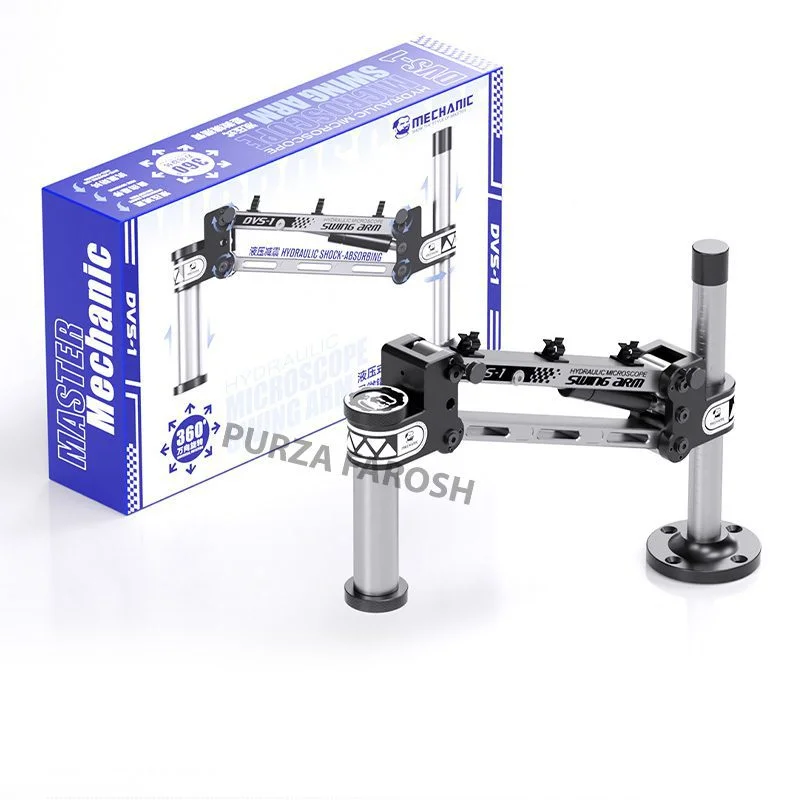
When performing detailed mobile phone motherboard repair, micro-soldering, IC inspection, and PCB work, having a stable microscope setup is just as important as having good magnification. Even a high-quality microscope can become difficult to use if its mounting system is unstable, difficult to reposition, or causes unwanted movement.
The MECHANIC DVS-1 Hydraulic Microscope Arm is designed as a flexible microscope support solution for precision repair environments. It combines hydraulic damping, flexible positioning, 360° rotation, and a supported load capacity of up to 6 kg, making it suitable for compatible microscope setups used in mobile repair and electronics work.
This guide explains what the DVS-1 is, how its hydraulic swing-arm design works, its important features, and what technicians should consider when adding it to a professional mobile repair workstation.
What Is the MECHANIC DVS-1 Hydraulic Microscope Arm?
The MECHANIC DVS-1 is a hydraulic microscope swing arm designed to support and position a compatible microscope during detailed repair and inspection work.
Instead of keeping the microscope in one fixed position, a swing-arm design allows the microscope to be moved across the working area. This can be particularly useful when technicians need to inspect different sections of a motherboard or move the microscope away temporarily to access the repair area.
According to MECHANIC’s product information, the DVS-1 measures 340 × 240 × 65 mm, has a net weight of 2.4 kg, supports a maximum load of 6 kg, and has an arm swing range of 240–340 mm.
The manufacturer categorizes it under microscope accessories and optical applications, while also identifying it for mobile repair equipment.
Why Microscope Stability Matters in Mobile Phone Repair
Mobile phone motherboard repair often involves extremely small components, solder joints, pads, traces, and connectors.
During micro-soldering or PCB inspection, unwanted movement of the microscope can make it harder to maintain a consistent view of the working area.
A stable microscope mounting system can be useful for tasks such as:
- IC inspection
- Micro-soldering
- PCB inspection
- Solder-joint checking
- SMD component replacement
- Jumper-wire work
- Motherboard troubleshooting
- Board-level mobile repair
The DVS-1 does not replace the microscope itself. Instead, it acts as a microscope support and positioning system, helping technicians position a compatible microscope according to the requirements of their workstation.
Hydraulic Damping for Smoother Microscope Movement
One of the main features of the DVS-1 is its hydraulic shock-absorbing design.
Traditional microscope arms can sometimes transmit unwanted movement when repositioned. Hydraulic damping is designed to make arm movement smoother and help reduce sudden movement and vibration.
This can be particularly useful when working with high magnification, where even relatively small movements can become noticeable in the microscope’s field of view.
For mobile repair technicians, smoother positioning can make it easier to move the microscope from one section of a PCB to another without repeatedly rearranging the entire workstation.
360° Rotation and Flexible Positioning
The DVS-1 provides 360° rotation, giving technicians greater flexibility when positioning the microscope.
This can be useful in a busy repair environment where the microscope needs to move between different working positions.
For example, a technician may need to:
- Position the microscope above a motherboard.
- Inspect a specific IC or PCB section.
- Move the microscope slightly to access another area.
- Push the microscope away when additional tools are required.
- Bring it back into position for detailed inspection.
The swing-arm design makes these movements more practical than working with a completely fixed microscope position.
6kg Load Capacity
Another important specification is the DVS-1’s maximum supported load of 6 kg.
This specification is important when selecting a microscope arm because the total supported setup needs to remain within the manufacturer’s stated capacity.
Before installation, technicians should consider the weight of the microscope head and any compatible accessories being supported.
Do not assume that every microscope configuration is suitable simply because it physically fits the mounting system. Always verify compatibility, mounting requirements, and total load before use.
DVS-1 Hydraulic Microscope Arm Specifications
| Specification | DVS-1 |
|---|---|
| Brand | MECHANIC |
| Model | DVS-1 |
| Product Type | Hydraulic Microscope Swing Arm |
| Dimensions | 340 × 240 × 65 mm |
| Net Weight | 2.4 kg |
| Maximum Supported Load | 6 kg |
| Arm Swing Range | 240–340 mm |
| Rotation | 360° |
| Application | Microscope / Mobile Repair / Electronics Work |
The core specifications above are listed by MECHANIC’s official product information.
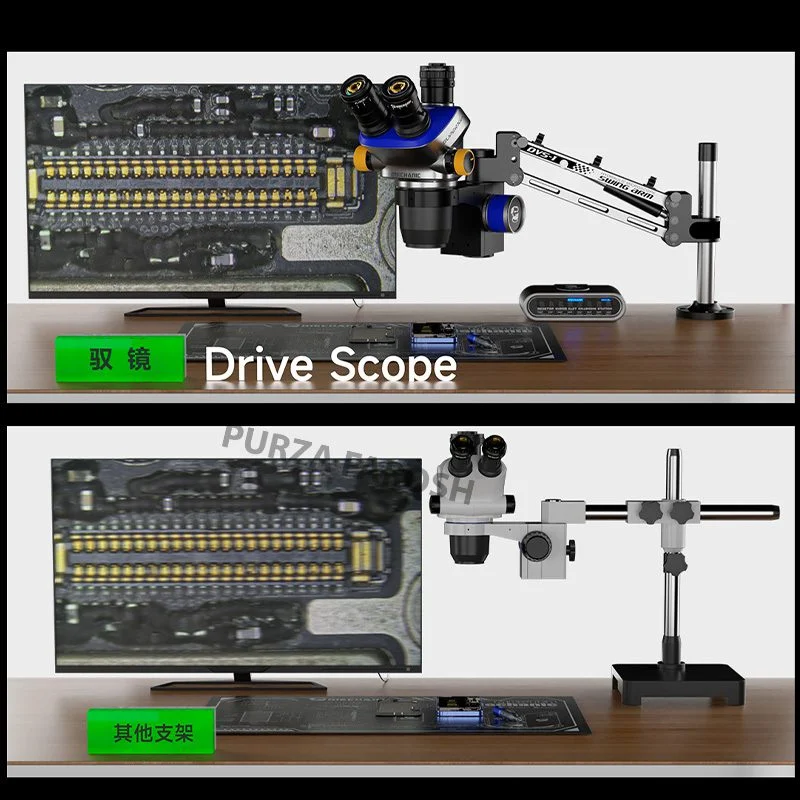
DVS-1 Hydraulic Arm vs Fixed Microscope Stand
A fixed microscope stand can work well for technicians who normally keep their microscope in one position.
A hydraulic swing arm becomes useful when flexible positioning is an important part of the workflow.
| Feature | Fixed Microscope Stand | DVS-1 Hydraulic Arm |
|---|---|---|
| Positioning | More fixed | Flexible |
| Rotation | Depends on design | 360° |
| Hydraulic damping | Usually not included | Yes |
| Arm movement | Limited | 240–340 mm swing range |
| Workspace flexibility | Moderate | Higher |
| Best suited for | Fixed work areas | Flexible repair workflows |
The right option depends on the microscope, workspace, mounting requirements, and the technician’s working style.
Who Can Benefit From a Hydraulic Microscope Arm?
The DVS-1 can be relevant for several precision-work environments.
Mobile Phone Repair Technicians
Technicians performing motherboard-level repair can benefit from having a microscope that can be repositioned around the repair area.
Micro-Soldering Workstations
Micro-soldering requires a stable and properly positioned microscope. A hydraulic arm can make microscope positioning more flexible.
PCB Repair Technicians
PCB inspection often requires access to different sections of a board. A swing arm can provide additional positioning flexibility.
Electronics Repair Labs
Electronics technicians working with different boards and components may find an adjustable microscope support useful for maintaining an organized workstation.
How to Set Up a DVS-1 Microscope Swing Arm
Before using the DVS-1, make sure the mounting surface or compatible base is stable and appropriate for the installation.
A practical setup workflow is:
Step 1: Prepare the Workstation
Choose a stable workbench with sufficient space for the arm and microscope.
Step 2: Secure the Mounting System
Install the arm according to the manufacturer’s mounting instructions and ensure the support is securely fixed.
Step 3: Attach the Compatible Microscope
Install the compatible microscope carefully and verify that the mounting connection is secure.
Step 4: Check the Balance
Make sure the microscope is properly balanced and that the total supported weight stays within the specified 6 kg maximum load.
Step 5: Adjust the Arm
Move the arm gradually to find the appropriate working position.
Step 6: Test Before Precision Work
Before starting micro-soldering or board-level repair, test the movement and stability of the microscope at the desired position.
How to Choose a Hydraulic Microscope Arm
If you are comparing a hydraulic microscope arm with other microscope mounting systems, consider these factors:
Load Capacity
Check the manufacturer’s maximum supported load and compare it with your microscope configuration.
Arm Range
A larger working range can provide more flexibility, but the required range depends on your workstation.
Rotation
A rotating arm can make it easier to move the microscope around the work area.
Damping
Hydraulic damping can be useful where smoother movement and reduced unwanted motion are important.
Compatibility
Always verify that the arm is compatible with your microscope and mounting arrangement before purchasing.
Workbench Space
Consider how much room the arm requires and whether it can move comfortably without interfering with other repair tools.
DVS-1 for a Professional Mobile Repair Workstation
A microscope arm is only one component of a complete mobile repair setup.
A professional workstation may also include:
- Stereo or digital microscope
- Soldering station
- Hot air rework station
- DC power supply
- Digital multimeter
- PCB holder
- Precision tweezers
- ESD protection
- PCB cleaning tools
- Microscope lighting
The goal is to create a workstation where the microscope and other tools can be positioned efficiently without unnecessarily restricting the technician’s working area.
Frequently Asked Questions
What is the MECHANIC DVS-1?
The MECHANIC DVS-1 is a hydraulic microscope swing arm designed to support and reposition compatible microscopes for precision inspection and repair applications.
How much weight can the DVS-1 support?
The official MECHANIC specification lists a maximum supported load of 6 kg.
Does the DVS-1 rotate?
Yes. The DVS-1 is specified with a 360° rotation capability.
What is the DVS-1 arm swing range?
MECHANIC lists the arm swing range as 240–340 mm.
Is the DVS-1 suitable for mobile phone repair?
The manufacturer categorizes the DVS-1 under mobile repair equipment and microscope accessories, making it relevant to mobile phone and electronics repair setups.
Is the DVS-1 a microscope?
No. The DVS-1 is a microscope swing arm/accessory. It supports and positions a compatible microscope rather than providing the microscope optics itself.
Final Thoughts
The MECHANIC DVS-1 Hydraulic Microscope Arm is designed for technicians who need greater flexibility and stability when positioning a microscope during precision repair work.
Its hydraulic damping, 360° rotation, 240–340 mm swing range, and 6 kg maximum supported load make it a practical microscope mounting option for compatible mobile repair and electronics workstations.
When choosing a microscope arm, however, specifications should always be matched to the actual microscope, mounting system, workspace, and repair requirements.
For technicians performing mobile phone motherboard repair, PCB inspection, micro-soldering, and detailed electronics work, a properly selected microscope arm can help create a more flexible and organized repair workstation.