



Complete Mobile Repairing Tools List (2026 Guide for Beginners & Professionals)

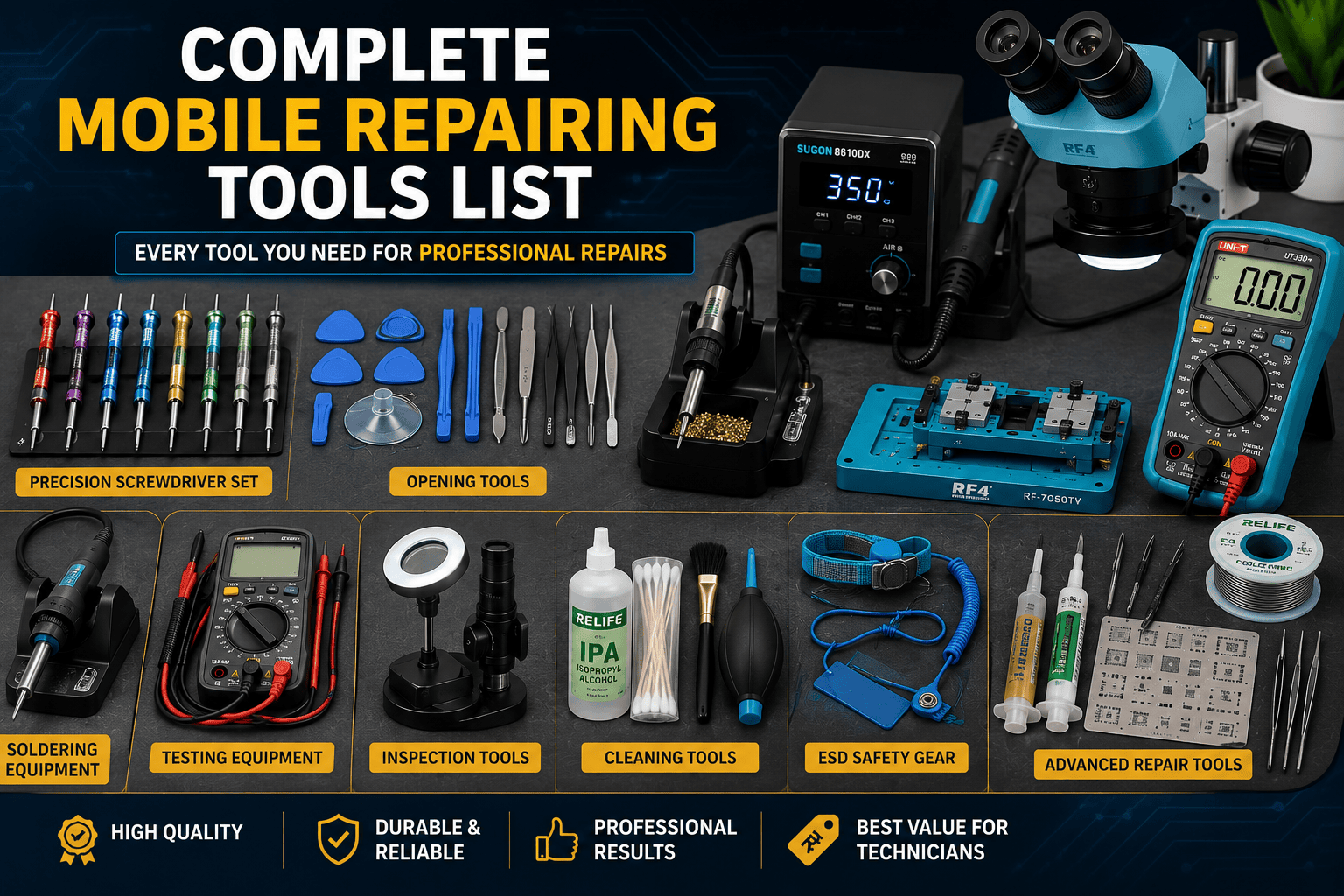
Choosing the right mobile repairing tools is one of the most important steps for anyone who wants to learn mobile phone repair or start a repair business. Whether you are replacing a screen, changing a battery, repairing a charging port, or working on a motherboard, using the right tools makes every repair easier, safer, and more accurate.
Many beginners make the mistake of buying cheap or unnecessary tools. This often leads to poor repair quality, damaged phone parts, and extra expenses. Instead of purchasing everything at once, it’s better to build your toolkit step by step with reliable tools that you will use every day.
In this complete guide, you’ll learn about the essential mobile repairing tools used by beginners and professional technicians. We’ll also explain what each tool is used for, why it is important, and how to choose the right equipment for your repair work.
Why Every Mobile Technician Needs the Right Tools
Mobile phones have become more advanced over the years. Modern smartphones contain tiny screws, delicate flex cables, small ICs, and sensitive electronic components. Repairing these devices without proper tools increases the risk of damaging expensive parts.
Using quality repair tools offers several benefits:
- Makes repairs easier and faster.
- Reduces the risk of damaging phone components.
- Improves repair accuracy.
- Helps technicians work more professionally.
- Saves money by avoiding repeated tool replacements.
- Builds customer trust through better repair quality.
Whether you’re repairing Android phones or iPhones, investing in reliable tools is always a smart decision.
Basic Mobile Repairing Tools Every Beginner Should Own
If you’re just starting your journey in mobile phone repair, you don’t need an expensive workshop. A basic toolkit is enough for many common repairs. These tools are used almost every day by mobile technicians and should be the first items you buy.
1. Precision Screwdriver Set
A precision screwdriver set is one of the most important tools for mobile repairing. Smartphones use different screw types, including Phillips, Torx, Pentalobe, and Tri-point screws. Using the correct screwdriver prevents screws from getting damaged and makes opening the device much easier.
Look for a screwdriver set with:
- Magnetic tips
- Comfortable grip
- Strong steel bits
- Multiple screwdriver heads
- Storage case for easy organization
A quality screwdriver set can last for years and is suitable for repairing different smartphone brands.
2. Plastic Opening Picks
Opening picks help separate the screen or back cover from the phone without causing scratches or cracks. Since they are made of plastic, they are much safer than using metal objects.
Plastic opening picks are commonly used for:
- Screen replacement
- Battery replacement
- Back glass removal
- Opening waterproof smartphones
Always use gentle pressure while opening a phone to avoid damaging the display or internal clips.
3. Plastic Pry Tools (Spudgers)
Plastic pry tools, also known as spudgers, are designed to disconnect connectors and lift delicate components safely. Unlike metal tools, they reduce the risk of short circuits and scratches.
These tools are useful for:
- Disconnecting battery connectors
- Removing flex cables
- Opening phone housings
- Separating display connectors
A repair toolkit should always include different sizes of pry tools for various repair jobs.
4. Metal Spudger
While plastic tools are safer for most tasks, a metal spudger is useful for jobs that require additional strength. It helps remove stubborn adhesive, lift metal shields, and separate tightly sealed phone parts.
Use a metal spudger carefully to avoid damaging sensitive components or scratching the phone’s frame.
5. Precision Tweezers
Tweezers are one of the most frequently used tools in mobile repairing. Since smartphones contain tiny screws, connectors, and electronic parts, handling them with your fingers is difficult.
Good-quality tweezers help technicians:
- Pick up small screws
- Hold tiny components
- Position flex cables
- Remove adhesive strips
- Handle IC components during repair
Anti-static tweezers are recommended because they help protect sensitive electronic parts from static electricity.
6. Suction Cup
A suction cup is mainly used to lift smartphone displays and back glass panels. It creates a firm grip on smooth surfaces, allowing technicians to open the phone with less force.
It is especially useful when repairing:
- iPhones
- Samsung Galaxy devices
- Google Pixel phones
- Other smartphones with glued displays
Using a suction cup together with plastic opening picks makes screen removal much safer.
7. SIM Card Eject Tool
Although it is a simple tool, a SIM eject pin is essential in every repair toolkit. Many smartphone repairs require removing the SIM tray before opening the device.
Professional technicians usually keep several spare SIM eject tools because they are small and easy to misplace.
8. Magnetic Screw Mat
During repairs, smartphones often contain 10 to 50 tiny screws. Mixing them up can create serious problems during reassembly.
A magnetic screw mat helps you:
- Keep screws organized
- Prevent screws from rolling away
- Label different screw locations
- Speed up reassembly
This inexpensive tool can save a lot of time and reduce mistakes.
9. Cleaning Brush
Dust, dirt, and corrosion can affect the performance of smartphones. A soft anti-static cleaning brush helps clean delicate components without causing damage.
Cleaning brushes are commonly used for:
- Motherboards
- Charging ports
- Speaker grills
- Camera modules
- SIM card slots
Regular cleaning also improves the appearance of repaired devices before handing them back to customers.
10. Isopropyl Alcohol (IPA)
Isopropyl Alcohol, often called IPA, is widely used for cleaning electronic components. It evaporates quickly and leaves no residue, making it safe for smartphone repairs.
Technicians use IPA to:
- Remove old flux
- Clean motherboards
- Remove adhesive residue
- Clean charging ports
- Prepare surfaces before installing new parts
Using high-purity isopropyl alcohol provides better cleaning results.
11. Cotton Swabs and Lint-Free Cloth
Small accessories like cotton swabs and lint-free cloths play an important role in keeping repair work clean.
They are useful for:
- Cleaning camera lenses
- Removing fingerprints
- Cleaning connectors
- Applying isopropyl alcohol
- Wiping display panels
Always use lint-free materials to avoid leaving fibers inside the phone.
12. Anti-Static (ESD) Wrist Strap
Many people ignore ESD protection, but static electricity can permanently damage sensitive phone components.
An anti-static wrist strap helps discharge static electricity safely while working on electronic devices.
It is highly recommended for:
- Motherboard repairs
- IC replacement
- Flex cable repairs
- Chip-level repairing
Using ESD protection is considered a professional practice and helps prevent accidental damage.
Building Your First Mobile Repair Toolkit
If you’re starting with a limited budget, don’t worry. You don’t need to buy every tool on your first day. Start with the basic tools that you’ll use for common repair jobs such as screen replacement, battery replacement, and charging port cleaning.
A beginner toolkit should include:
- Precision screwdriver set
- Plastic opening picks
- Plastic pry tools
- Metal spudger
- Tweezers
- Suction cup
- Magnetic screw mat
- Cleaning brush
- Isopropyl alcohol
- Cotton swabs
- Anti-static wrist strap
These tools are enough to perform many basic smartphone repairs safely and efficiently.
Soldering Equipment for Mobile Repairing
Once you’ve learned basic phone repairs, the next step is to invest in soldering equipment. These tools allow you to repair charging ports, replace connectors, fix damaged circuits, and perform motherboard repairs.
Professional technicians rely on quality soldering tools because they provide better temperature control, safer repairs, and more accurate results.
13. Soldering Station
A soldering station is one of the most important tools in any mobile repair workshop. Unlike a basic soldering iron, a soldering station allows you to control the temperature, making it much safer for delicate smartphone components.
A good soldering station is commonly used for:
- Charging port replacement
- Microphone replacement
- Connector repairs
- Jumper wire installation
- Small motherboard repairs
What to Look for
Choose a soldering station that offers:
- Adjustable temperature
- Fast heating
- Stable temperature control
- Comfortable soldering handle
- Replaceable soldering tips
Buying a quality soldering station helps improve repair quality and reduces the chances of damaging the motherboard.
14. Hot Air Rework Station
A hot air rework station is another essential tool for professional mobile repairing. Instead of direct contact, it uses controlled hot air to remove or install electronic components.
It is mainly used for:
- IC removal
- IC installation
- Display connector repairs
- CPU heating
- Removing adhesive
- Chip-level repairing
Most professional repair shops use a hot air station every day because many modern smartphone repairs require precise heat control.
Features to Consider
Look for a model with:
- Adjustable airflow
- Adjustable temperature
- Digital display
- Fast heating
- Automatic cooling function
These features help make repairs safer and more efficient.
15. Solder Wire
Solder wire is used to create strong electrical connections between components. Without quality solder wire, even the best soldering station cannot produce reliable results.
Good solder wire should:
- Melt smoothly
- Flow evenly
- Create clean joints
- Leave minimal residue
Different thicknesses are available, and technicians often keep multiple sizes for different repair jobs.
16. Flux Paste
Flux is a small item with a big impact. It helps solder flow properly and improves the quality of solder joints.
Flux is commonly used during:
- Charging port replacement
- IC work
- Jumper repairs
- Motherboard repairs
- Connector replacement
Benefits of using flux include:
- Cleaner solder joints
- Better heat transfer
- Reduced oxidation
- Easier soldering
A small amount of quality flux can make difficult repair jobs much easier.
17. Solder Wick (Desoldering Braid)
Sometimes old solder needs to be removed before installing a new component. This is where solder wick becomes useful.
It helps:
- Remove excess solder
- Clean solder pads
- Prepare motherboards for new components
- Repair damaged solder joints
Every technician should keep solder wick in their repair toolkit.
18. PCB Holder
Working on a loose motherboard can be frustrating. A PCB holder keeps the board firmly in place while you solder or inspect components.
Advantages include:
- Better stability
- Improved accuracy
- Safer repairs
- Less hand movement
- More comfortable working position
This simple tool makes soldering much easier, especially for beginners.
Testing Equipment for Mobile Repairing
Finding a problem is often more important than fixing it. Professional technicians use testing equipment to diagnose faults before replacing parts.
Proper testing saves time and prevents unnecessary repairs.
19. Digital Multimeter
A digital multimeter is one of the most valuable tools in mobile repairing. It helps technicians test electrical circuits and identify faulty components.
A multimeter can measure:
- Voltage
- Current
- Resistance
- Continuity
- Diodes
It is useful for diagnosing:
- Charging issues
- Short circuits
- Battery problems
- Fuse failures
- Damaged connectors
Learning how to use a multimeter correctly is an important skill for every mobile technician.
20. DC Power Supply
A DC power supply provides controlled power directly to the motherboard. It helps technicians diagnose phones that do not turn on or have power-related issues.
Common uses include:
- Power testing
- Current consumption analysis
- Short circuit detection
- Motherboard diagnostics
A variable DC power supply is especially useful for advanced repair work.
21. USB Tester
Charging problems are common in smartphones. A USB tester helps measure charging voltage and current, making it easier to identify faulty chargers, cables, or charging ports.
It helps technicians:
- Test charging speed
- Check USB cables
- Diagnose charging faults
- Monitor voltage output
This small device is affordable and can save valuable diagnostic time.
22. Battery Tester
Not every battery issue requires replacement. A battery tester helps determine whether a battery is healthy or needs to be changed.
It can check:
- Battery voltage
- Battery condition
- Charging performance
- Capacity
Testing batteries before replacing them helps reduce unnecessary costs for both technicians and customers.
Inspection Tools
Smartphone components are becoming smaller every year. Many repair tasks require close inspection to identify damaged parts or poor solder joints.
Inspection tools improve accuracy and help technicians perform professional-quality repairs.
23. Mobile Repair Microscope
A microscope is considered essential for technicians who perform motherboard repairs. It allows you to see tiny electronic components that are invisible to the naked eye.
A repair microscope is useful for:
- Motherboard inspection
- IC replacement
- Jumper work
- Solder joint inspection
- Connector repairs
Professional repair shops often use stereo microscopes because they provide a clear, three-dimensional view of the work area.
24. Magnifying Lamp
If you’re not ready to invest in a microscope, a magnifying lamp is a good alternative. It provides additional light and magnification, making it easier to inspect small parts.
It is commonly used for:
- Connector inspection
- Cleaning work
- Basic soldering
- Flex cable inspection
25. LED Work Light
Good lighting is often overlooked, but it plays an important role in repair quality.
A bright LED work light helps reduce eye strain and improves visibility when working with small smartphone components.
Choose a light with adjustable brightness and flexible positioning for the best results.
Cleaning Tools for Mobile Repairing
Keeping mobile phone components clean is just as important as repairing them. Dust, moisture, old adhesive, and solder residue can affect a phone’s performance. Professional technicians always clean the device before and after completing a repair.
Below are the most commonly used cleaning tools in mobile repairing.
26. Isopropyl Alcohol (IPA)
Isopropyl Alcohol, also known as IPA, is one of the safest cleaning liquids for electronic devices. It evaporates quickly and does not leave moisture behind.
Technicians use IPA for:
- Cleaning motherboards
- Removing flux residue
- Cleaning charging ports
- Removing fingerprints
- Cleaning camera modules
- Preparing surfaces before installing new parts
Using high-purity IPA helps improve cleaning results and protects sensitive components.
27. Anti-Static Cleaning Brush
A soft anti-static brush is designed to remove dust without generating static electricity.
It is commonly used for:
- Motherboard cleaning
- Speaker cleaning
- Charging port cleaning
- Dust removal
- Camera module cleaning
Always choose a soft-bristle brush to avoid scratching delicate parts.
28. Air Blower
An air blower helps remove dust from areas that are difficult to reach.
It is useful for cleaning:
- Charging ports
- Ear speakers
- SIM card slots
- Camera lenses
- Motherboards
Unlike compressed air cans, a manual air blower is reusable and easy to carry.
29. Lint-Free Microfiber Cloth
A microfiber cloth is ideal for cleaning smartphone displays and back glass without leaving scratches or fibers.
Use it for:
- Screen cleaning
- Camera lens cleaning
- Removing fingerprints
- Final polishing before returning the phone to the customer
30. Adhesive Remover
Modern smartphones use strong adhesive to hold displays and back covers in place. Adhesive remover helps soften old glue, making it easier to remove damaged screens or batteries.
Always use adhesive remover carefully and avoid contact with sensitive electronic components.
ESD Safety Equipment
Many beginners ignore Electrostatic Discharge (ESD) protection. However, a small static discharge from your body can permanently damage sensitive phone components.
Professional repair shops always use ESD-safe equipment.
31. ESD Mat
An ESD mat provides a safe working surface by reducing static electricity.
Benefits include:
- Protects motherboards
- Prevents accidental static discharge
- Organizes the workspace
- Improves repair safety
Choose a large mat with screw compartments if possible.
32. Anti-Static Wrist Strap
A wrist strap connects you to the ESD mat and safely releases static electricity from your body.
This simple accessory is highly recommended when working on:
- Motherboards
- IC replacement
- Flex cables
- Display connectors
33. Anti-Static Tweezers
Regular metal tweezers can generate static electricity. Anti-static tweezers reduce this risk while providing better control when handling tiny components.
Professional technicians use anti-static tweezers for:
- IC handling
- Flex cable installation
- Connector replacement
- Small component placement
Advanced Chip-Level Repair Tools
Once you become confident with basic repairs, you may start learning chip-level repairing. This requires specialized equipment designed for motherboard repairs.
34. BGA Reballing Kit
A BGA Reballing Kit is used when repairing or replacing integrated circuits (ICs). It helps technicians create new solder balls before reinstalling the chip.
This tool is mainly used for:
- CPU repairs
- Memory IC repairs
- Power IC replacement
- Advanced motherboard work
It is generally used by experienced technicians.
35. BGA Stencils
BGA stencils help apply solder balls evenly to ICs during the reballing process.
Different smartphones require different stencil sizes, so technicians often keep multiple stencil sets.
36. PCB Preheater
A PCB preheater warms the motherboard before soldering or chip removal.
Benefits include:
- Reduces thermal stress
- Prevents board warping
- Improves solder flow
- Makes IC removal easier
It is especially useful for modern multi-layer smartphone motherboards.
37. Heating Plate
A heating plate is commonly used to soften adhesive before removing screens, batteries, or back glass.
Common applications include:
- Screen replacement
- Battery removal
- Back glass replacement
Controlled heating reduces the risk of breaking delicate parts.
38. UV Curing Lamp
When replacing smartphone back glass or repairing certain components, UV glue is often used. A UV curing lamp hardens the adhesive quickly and provides a strong finish.
39. Precision Knife
A precision repair knife helps remove adhesive, protective films, and damaged seals.
It should always be used carefully to avoid damaging nearby components.
Best Mobile Repair Tool Brands
Choosing trusted brands is just as important as choosing the right tools. Professional brands usually offer better build quality, improved durability, and more accurate performance.
Below are some of the most popular brands used by technicians in Pakistan and around the world.
Kaisi
Kaisi is one of the most popular names in mobile repairing. The brand offers:
- Precision screwdriver sets
- Repair toolkits
- Tweezers
- Opening tools
- Cleaning accessories
Kaisi products are known for their durability and excellent value for money.
RF4
RF4 manufactures professional repair equipment for advanced technicians.
Popular RF4 products include:
- PCB holders
- Repair microscopes
- Precision tweezers
- Motherboard repair accessories
Their products are widely used in professional repair labs.
Relife
Relife is trusted for its high-quality soldering accessories and repair consumables.
Popular products include:
- Flux paste
- Solder wire
- Tweezers
- IC repair tools
- Cleaning products
Sugon
Sugon is well known for manufacturing professional soldering equipment.
Their product range includes:
- Hot air stations
- Soldering stations
- Power supplies
- Repair equipment
Many repair shops prefer Sugon because of its stable temperature control and reliable performance.
Jakemy
Jakemy is one of the most recognized brands for precision hand tools.
Popular Jakemy products include:
- Screwdriver sets
- Opening tools
- Repair kits
- Magnetic tool sets
These tools are suitable for beginners and professionals alike.
Mechanic
Mechanic produces premium repair tools for advanced mobile technicians.
Their products include:
- Microscopes
- Soldering accessories
- Repair consumables
- IC repair equipment
Mechanic products are commonly found in professional repair workshops.
Eagle
Eagle manufactures reliable repair accessories, precision tools, and workshop equipment. Their products are designed for everyday repair work and offer good durability.
OSS Team
OSS Team is another trusted brand among professional technicians. They offer advanced repair tools, precision accessories, and soldering equipment used for complex mobile phone repairs.
Sunshine
Sunshine is popular for producing repair machines, power supplies, LCD separators, heating plates, and testing equipment. Many technicians use Sunshine products because of their consistent performance.
UNI-T
UNI-T is one of the world’s leading manufacturers of digital multimeters and electronic testing equipment.
Their products are trusted for:
- Accurate measurements
- Strong build quality
- Easy operation
- Long-term reliability
A UNI-T multimeter is an excellent investment for any technician who wants accurate diagnostics.
How to Choose the Right Mobile Repairing Tools
Buying the right tools is just as important as learning repair skills. With so many brands and products available in the market, beginners often get confused about where to start. Instead of buying everything at once, focus on tools that you will use regularly.
Here are a few things to consider before buying mobile repairing tools.
1. Buy According to Your Skill Level
If you’re new to mobile repairing, start with basic tools such as screwdrivers, opening picks, tweezers, a multimeter, and cleaning accessories. As your experience grows, you can invest in advanced equipment like hot air stations, microscopes, and PCB preheaters.
Buying advanced tools too early may increase your costs without providing much benefit.
2. Choose Original Products
Original tools usually last longer and deliver better performance. They are made from quality materials and provide greater accuracy during repairs.
Although original products may cost more initially, they help you avoid frequent replacements and improve repair quality over time.
3. Focus on Quality Instead of Price
Many beginners choose the cheapest tools available. While this may save money initially, low-quality tools often wear out quickly and can damage phone components.
A reliable tool is a long-term investment that helps you work more efficiently and confidently.
4. Read Product Reviews
Before purchasing any repair equipment, check customer reviews and product ratings. Reviews from other technicians can help you understand the quality, durability, and performance of the tool.
This simple step can help you avoid poor-quality products.
5. Buy from Trusted Suppliers
Always purchase your tools from suppliers who provide genuine products and good customer support. Trusted suppliers also offer a wider range of brands, making it easier to compare different options.
Common Mistakes Beginners Make
Every technician starts as a beginner, but avoiding common mistakes can save both time and money.
Buying Cheap Tool Kits
Low-cost repair kits may seem attractive, but they often include poor-quality tools that wear out quickly or fail during repairs.
Using Household Tools
Some beginners use kitchen knives, regular screwdrivers, or other household tools to open smartphones. These tools can easily damage the phone’s frame, display, or internal components.
Always use tools designed specifically for mobile phone repairs.
Ignoring ESD Protection
Static electricity can damage sensitive electronic components without leaving visible signs. Using an ESD mat and wrist strap helps protect the motherboard and other delicate parts.
Buying Too Many Tools at Once
You don’t need every repair tool on your first day. Build your toolkit gradually based on the type of repairs you perform most often.
This approach helps you manage your budget more effectively.
Skipping Practice
Having professional tools does not automatically make someone a professional technician. Spend time practicing on old or damaged phones before working on customer devices.
Practice improves confidence, speed, and repair quality.
How to Build a Mobile Repair Toolkit on a Budget
Starting a repair business doesn’t require a huge investment. By purchasing tools in stages, you can build a professional toolkit without overspending.
Stage 1 – Beginner Toolkit
Start with:
- Precision Screwdriver Set
- Plastic Opening Picks
- Plastic Pry Tools
- Tweezers
- Suction Cup
- Cleaning Brush
- Isopropyl Alcohol
- Cotton Swabs
- Magnetic Screw Mat
- Digital Multimeter
This toolkit is suitable for basic smartphone repairs.
Stage 2 – Intermediate Toolkit
Once you’re comfortable with basic repairs, add:
- Soldering Station
- Hot Air Rework Station
- PCB Holder
- Flux Paste
- Solder Wire
- Solder Wick
- USB Tester
- DC Power Supply
These tools allow you to perform more advanced repairs.
Stage 3 – Professional Toolkit
Professional repair shops should consider adding:
- Stereo Microscope
- PCB Preheater
- Heating Plate
- BGA Reballing Kit
- UV Curing Lamp
- Advanced Testing Equipment
These tools are ideal for technicians who perform motherboard and chip-level repairs.
Where to Buy Original Mobile Repairing Tools in Pakistan
Finding genuine mobile repairing tools is essential for achieving reliable repair results. Original tools offer better performance, improved durability, and greater precision compared to low-quality alternatives.
If you’re looking for professional mobile repairing equipment in Pakistan, choose a supplier that offers authentic products from trusted brands. This ensures you receive quality tools backed by reliable customer service and product support.
At Purza Farosh, you can explore a wide range of mobile repairing tools and accessories suitable for beginners, experienced technicians, and repair businesses. The store offers products from well-known brands such as Kaisi, RF4, Relife, Sugon, Jakemy, Mechanic, Eagle, OSS Team, Sunshine, ZJWY, and UNI-T.
Whether you need a basic screwdriver set or advanced repair equipment like microscopes and soldering stations, choosing genuine products helps improve repair quality and long-term performance.
Frequently Asked Questions
Find quick answers about mobile repairing tools, brands, delivery, professional use, and tool prices in Pakistan.
What tools are required for mobile repairing?
A basic mobile repairing toolkit should include a precision screwdriver set, opening picks, pry tools, tweezers, suction cup, digital multimeter, cleaning brush, isopropyl alcohol, soldering equipment, and anti-static accessories.
Which mobile repairing tools should beginners buy first?
Beginners should start with essential hand tools such as screwdrivers, tweezers, opening tools, a magnetic screw mat, and a digital multimeter. These tools are enough for many common smartphone repairs.
Which brand is best for mobile repairing tools?
Some of the most trusted brands include Kaisi, RF4, Relife, Sugon, Jakemy, Mechanic, Eagle, OSS Team, Sunshine, ZJWY, and UNI-T. Each brand offers different products designed for beginners and professionals.
How much does a complete mobile repairing toolkit cost?
The cost depends on the tools you need. A beginner toolkit may cost between PKR 20,000 and PKR 40,000, while a professional setup with advanced equipment can cost PKR 150,000 or more.
Can I learn mobile repairing with basic tools?
Yes. Many beginners start with a simple toolkit and gradually upgrade as they gain experience. Learning proper repair techniques is just as important as buying professional equipment.